
- Cavity Barriers
Call Us Anytime!
Our team is always ready to pick your call and help you.
01670 331788
Cavity Barriers Installed Where Fire Wants to Travel
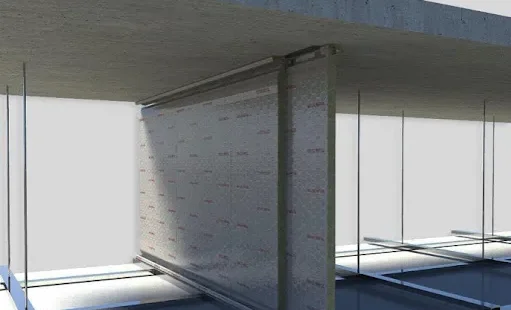
On new-build projects we coordinate sequencing carefully with the façade contractor, the M&E; trades and the dryliner. On existing buildings — particularly residential remediation schemes — we carry out invasive surveys to verify the as-built condition before installing or replacing barriers.
Our Capability Includes
- External wall cavity barriers — open-state and closed-state
- Compartment line vertical and horizontal cavity barriers
- Floor-to-façade interface cavity barriers
- Cavity barriers around windows, doors and other façade openings
- Ceiling and floor void barriers
- Riser and service duct cavity barriers
- Roof void compartmentation
- Acoustic cavity barriers where dual performance is required
Our Delivery Process
Frequently Asked Questions
What is the difference between open-state and closed-state cavity barriers?
Ans. Closed-state barriers fully seal the cavity at all times. Open-state barriers contain an intumescent strip that expands only in a fire, allowing the cavity to remain ventilated in normal use — important for drained-and-ventilated rainscreen façades.
Do older buildings need cavity barriers retrofitted?
Ans. Increasingly, yes. PAS 9980 appraisals of existing residential buildings frequently identify missing or non-compliant cavity barriers as a primary remedial action, particularly within external wall systems.
Can you install cavity barriers behind a completed façade?
Ans. In some cases, yes — through targeted façade panel removal — but this is significantly slower and more expensive than installing at the right point in the build sequence. We always recommend early engagement In some cases, yes — through targeted façade panel removal — but this is significantly slower and more expensive than installing at the right point in the build sequence. We always recommend early engagement.


